)
)
)
TRANSFORMING SCAFFOLD DESIGN
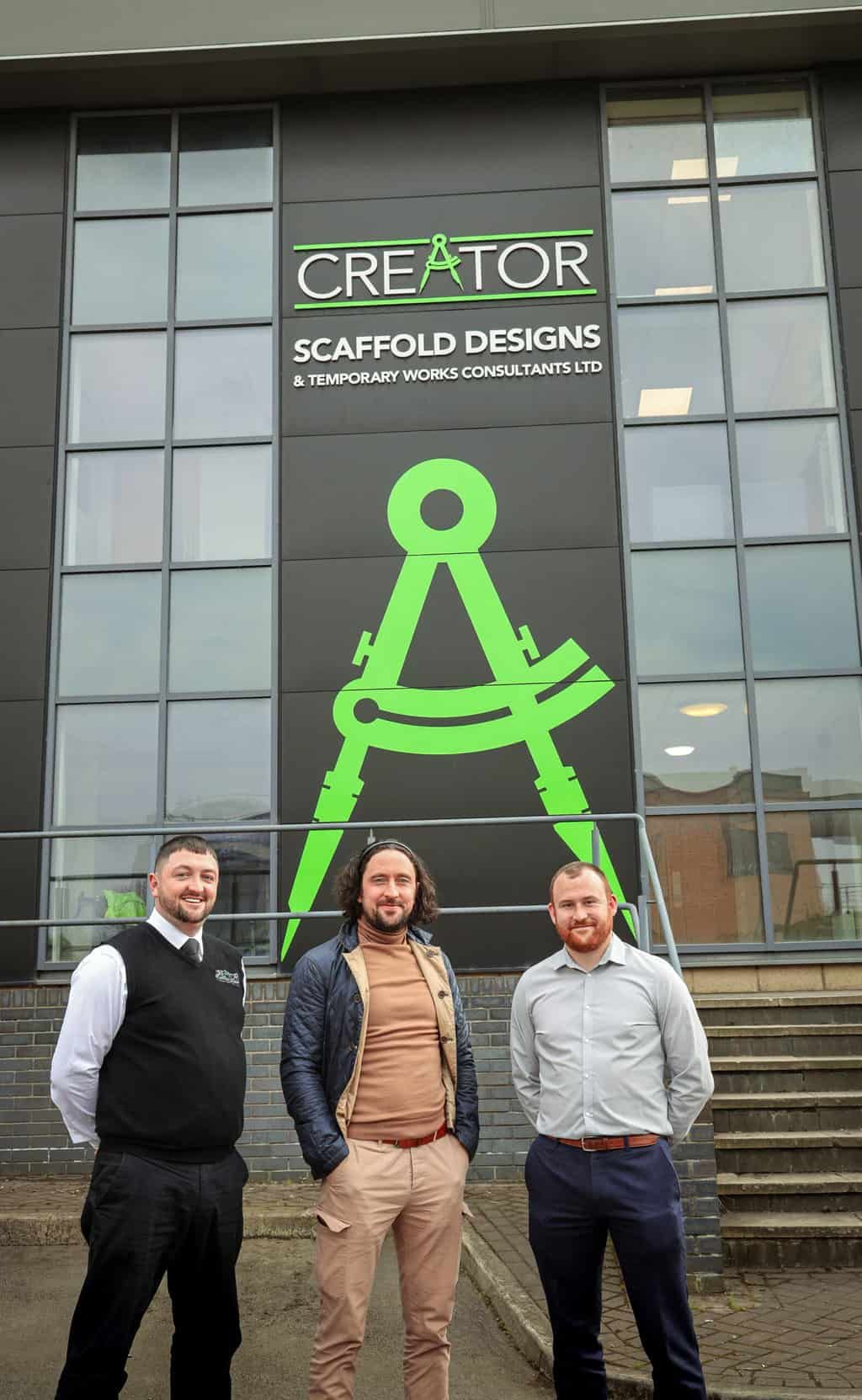
Founded by Ryan and Bradley Berry, former temporary works engineers, the company has grown from a humble cabin to a modern design office with a team of 15 and counting. In this article Creator reflects on the significant transformations that have occurred in scaffolding design over the past 10 years.
Transition to Limit State Design
Traditionally, scaffolding and temporary works relied on permissible stress design based on older British Standards. However, the industry gradually transitioned to the limit state design approach, following the release of BS EN 12811-1 in 2003. This change was driven by the need for more efficient and sustainable design solutions.
Ryan commented:
“It is this shift in design philosophy that inspired the inception of Creator. We have been successfully using this approach for the last 10 years and have demonstrated various benefits for its use. It was driven by the want to create efficiencies through design to benefit both economically and environmentally.”
Risk-based approach
Regulations like CDM 2015 and BS 5975 have led the industry to embrace a risk-based approach. Stringent checking procedures ensure design solutions are suitable, practicable, and economical.
This emphasis on risk assessment has elevated safety and structural robustness in scaffolding projects. This industry-wide shift necessitates stringent checking procedures, both contractually and in engineering, to ensure suitable, practicable, and economical design solutions. Adhering to these requirements is crucial for ensuring safety and robustness in scaffolding structures.
Ryan continued:
“All at Creator understand and appreciate the need for a safe and robust design. We have risen to this challenge and thrive upon it, producing detailed and accurate designs which have been appraised by some of the most stringent checking engineers around.”
The impact on the talent pool
Engineering courses began to cover limit state design and left permissible stress design behind, this expanded the talent pool entering the scaffolding industry.
Ryan explained:
“When entering the industry graduates can now build on their recent learning and hone their skills in an industry that would have usually dictated they started again and learned what they had been told was no longer relevant.”
Ryan concluded:
“Here at Creator we are an advocate of the limit state design approach and have proven that the shift is not only possible but successful. It is this change that we would invite others to follow and align themselves with permanent works engineers making the skill gap between the two sectors much shorter and the communication between the two simpler.
In the past, change has been forced by major incidents or technological advancements however the industry is growing naturally as more awareness and appreciation is given to it and this can only be a good thing. It shows there are no gaping flaws in how the sector practices. Complacency can soon put an end to that thought and this organic growth must continue.”